











Why don’t powder processing plants work properly?
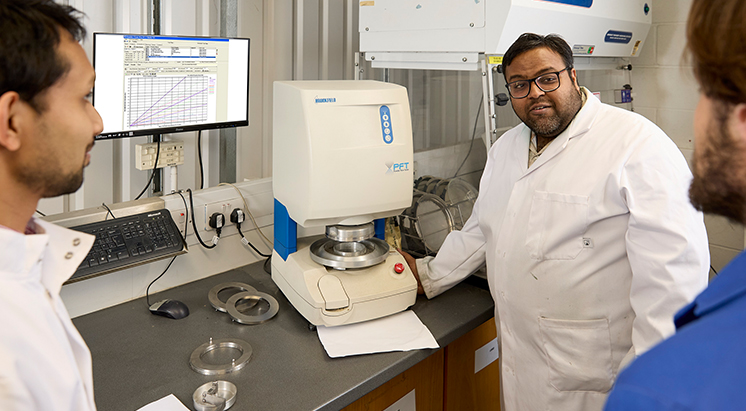
By Professor Mike Bradley, director, The Wolfson Centre for Bulk Solids Handling Technology
Powders are in almost everything. Foods, construction materials, plastics, paints, metals, pharmaceuticals etc – you name it, and it relies on powders. Most manufacturing plants include some hoppers, silos, blenders, mixers, compaction, dust extraction or other aspects of powder processing. Yet the statistics show that more often than not, these plants do not reach full performance, and often over-run extensively in time and cost to get them operating.
Why is this, and how can we educate to prevent it? 
In spite of the fact that most process engineers have to grapple with systems that handle and process powders and bulk solids at some point in their career, few ever get any formal training in the subject. Adding to the confusion is that every different powder has a different behaviour, so experience of what works in one place with one powder, generally will result in a misjudgement if it is applied directly to another powder or in a different context.
A familiar example is in hopper design – how many (or should I say how few?) hoppers or silos do not show outbreaks of “hammer rash” where they have been beaten to try to get material to flow, or have vibrators or air pads bolted on in an attempt to stop “arching” or “rat-holing” of the powder inside? Several decades ago a design procedure was put into the public domain that determines (for a given powder or set of powders) the slope angle, shape and outlet size that will give reliable discharge under gravity alone, with no need for beating, vibration or aeration. Unfortunately, this design method is often not applied – resulting in the “beaten hopper syndrome”. Sadly, many engineers do not even know that there IS such a design procedure, so the trouble continues and mistakes are often repeated.
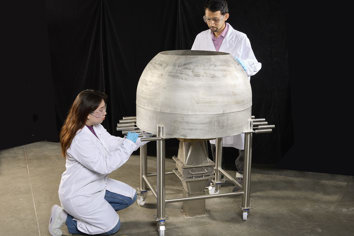
Hoppers are not the only problem area – pneumatic conveyors, mechanical conveyors, feeders and other handling systems can be troublesome. Problems with the powder – like segregation, lump formation, dust emission, particle breakage - are all commonplace.
The answer is to fill this training gap. Whether you are buying, using or supplying solids handling kit, the application of a little knowledge helps greatly in making sure you get the right equipment for the job. Good training courses in the area explain about the unique nature of different powders, how the powder behaviour can be measured objectively, the potential problems, the design methods there are for selecting the right solution, and also methods for troubleshooting of equipment that doesn’t work right. Both sides need to take some responsibility in this; the buyer knows about his process, and needs to apply enough knowledge to identify what key features the kit needs to embody, whereas the equipment supplier needs to know how he can measure the behaviour of the customer’s materials, identify potential problems arising from the context and apply the right design methods. With this sort of knowledge, it is much easier to make sure that the equipment works properly and the relationship between supplier and buyer does not turn sour.
For course information click here